Three Jersey Producers Offer a Look Inside Their Feeding Programs
Feed is the largest expense on most dairy farms, making every feeding decision important to profitability. While every dairy has its own approach to feeding cows, shaped by climate, available feedstuffs, facilities and production goals, successful producers share a common goal: optimizing milk production and components while improving feed efficiency and controlling costs.
Three dairy producers from across the country share how they feed their herds, track performance and adapt their programs to meet today’s challenges.
Despite differences in size, geography and rations, their answers point to a common theme: consistency matters. Whether it is providing quality forage, maintaining comfortable facilities, selecting strong genetics or sticking to sound management practices, they agree that getting the fundamentals right is the foundation of a successful feeding program.
Meet the Producers:
John Boer, Boer Jersey Dairy and Black Label Farm LLC, Dalhart, Texas: Boer Jersey Dairy is a partnership between Martin and Emily Boer and their son and daughter-in-law, John and Sarah Boer. John and Sarah operate Black Label Farms with their grown children, Gerret and Anneke. John and Gerret oversee day-to-day management of both farms.
Josh Docheff, Blue Sky Dairy, Mead, Colo.: Blue Sky Dairy is owned by Jim and Kristie Docheff and managed with their son, Josh.
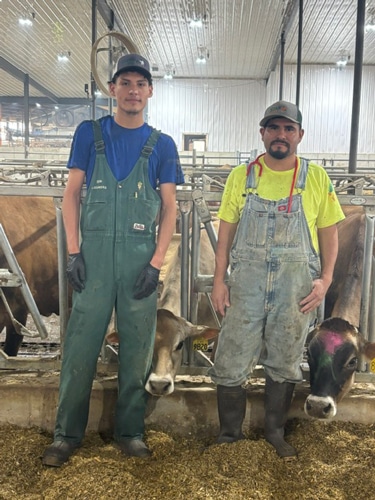
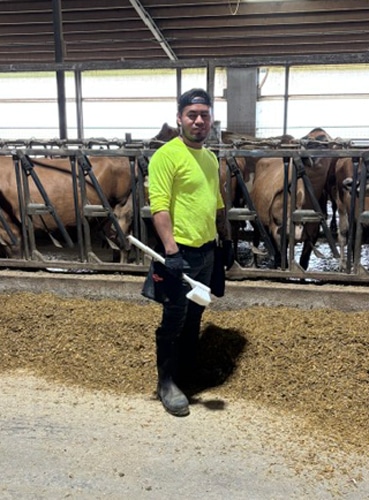
Evergreen Dairy Resort LLC, Antigo, Wis.: The dairy has been operated for 17 years and is currently owned by eight partners with varying ownership shares: Marc Braun, Dave Doolittle, John Freund, Mark Maus, Pat Prasalowicz, Larry Schofner, Kevin Ver Heyen, Gary Waldvogel. Braun serves as CEO, Freund as operations manager, and Connie DeRoos as general manager. The management team is supported by five herdsmen: Moises Bautista Antonio, Lissandro Alonso Gonzalez, Filomar Gamez Hernandez, Jose Landa and Sergio Ledesma Placencia.
Feeding Insights:
How many cows do you milk, and what is your production?
Boer: At Boer Jersey Dairy, we milk 2,600 Jerseys with a herd average of 29,550 lbs. milk (305-day mature equivalent) and tests of 5.2% fat and 4.1% protein. At Black Label Farms, we milk 3,100 Jerseys with a herd average of 28,700 lbs. milk and tests of 5.1% fat and 3.8% protein.
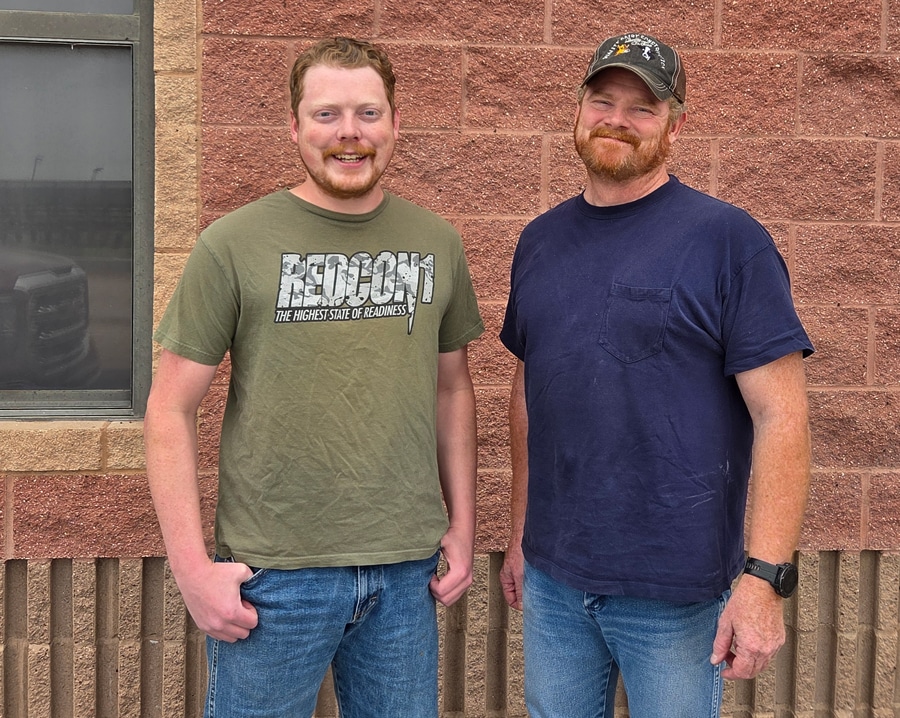
Docheff: We manage a 700-cow mixed herd that includes about 55% Holsteins, 40% Jerseys and 5% Brown Swiss. Our daily production average for June was 88 lbs. milk, with tests of 4.5% fat and 3.3% protein.
Evergreen Dairy: We milk 1,850 Jerseys and 200 Holstein-Jersey crosses, with average daily production of 70 lbs. milk and tests of 5.9% fat and 3.9% protein.
Describe your facilities and feeding program.
Boer: At Boer Jersey Dairy, cows are housed in freestall barns bedded with sand and milked in a double-25 parallel parlor. At Black Label, cows are housed in Saudi-style, compost barns and milked in a double-30 parallel parlor.
Cows at both facilities are fed a TMR that is formulated by Todd Stroup of Pine Creek Nutrition. Both rations include corn silage, wheat silage, straw, cottonseed, ground corn, canola and whey. The ration at Boer Jersey Dairy is also supplemented with Cargill OneTrak; no alfalfa hay is fed. At Black Label, the ration also includes dried distillers grain and alfalfa hay.
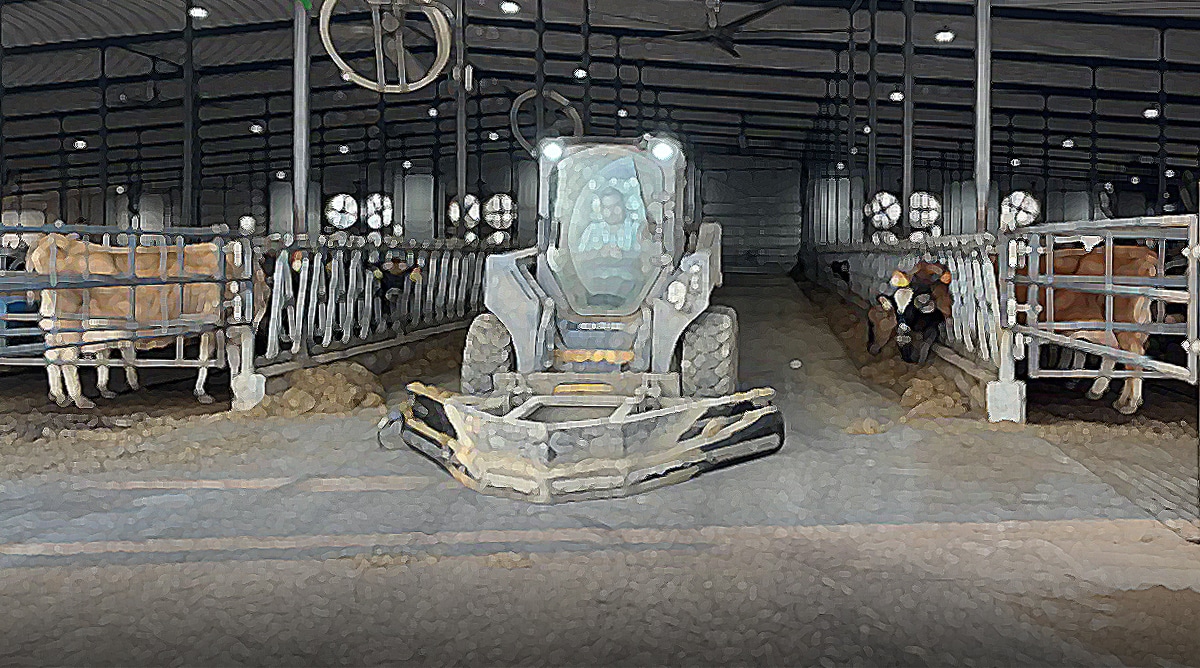
Docheff: We house cows in a freestall barn with sand bedding and fans. We milk three times a day in a double-eight herringbone parlor. We feed a total mixed ration (TMR) mix, dropping feed once a day and using Lely robots to push feed up every two hours.
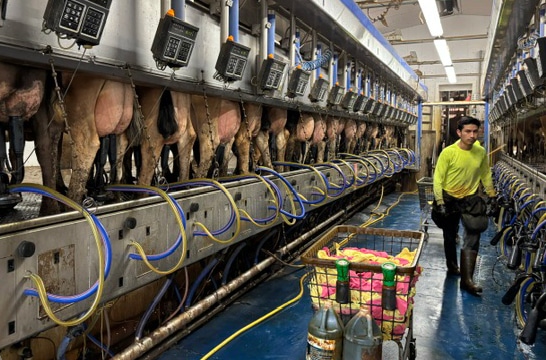
Evergreen Dairy: We milk cows in a double-20 parallel parlor and house them in a freestall barn bedded with sand. We feed a TMR.
Who buys your milk? Do you get premiums, and are they worth it?
Boer: We ship our milk to Hilmar Cheese Company. We receive a fat premium and a market (protein) premium. Our mailbox price is substantially better than other milk processors and coops in our area.
Docheff: We sell our milk to Dairy Farmers of America. They are currently the only cooperative in the state. We get bonuses on fat, protein and milk quality for somatic cell count, preliminary incubation and standard plate count.
Evergreen Dairy: We ship to Agropur in Weyauwega, Wis. We receive premiums for fat, protein and somatic cell count. They are a great boost to our milk check.
With more focus on milk protein, are you changing your feeding or breeding program? What are you trying?
Boer: With more emphasis on protein markets, we have not changed our feeding program. We have been focused on breeding for protein for the past 10 years. We ignore breeding for fat, but it usually tracks together with protein.
Docheff: We have placed a higher value on component bulls for many years now. We have always tried to breed cows to Holstein bulls that have a Combined Fat and Protein of at least +100 and use the same emphasis for Jersey bulls. Traditionally, I have always bred cows using milk-positive bulls but value components more now. I feel environment and feeding can have a much larger effect on pounds of milk and fat, but genetics play a much larger role in protein production.
We are always looking for feed sources and additives that help with herd health, reproduction, milk flow and components, with protein being one of those key performance indicators. We have looked at additives like amino acids, but the return has never justified the cost.
Evergreen Dairy: We breed cattle using sexed semen and are selecting bulls that have a better fat/protein ratio.
How do you track feed efficiency or cost per hundredweight, and how do you use that data?
Boer: We track net income per cow, after feed costs.
Docheff: Feed efficiency is monitored with intakes compared to energy-corrected milk (ECM) pounds per day. Currently, we run over 1.75 feed efficiency. This is a number we put a lot of value on for our operation because I feel it is an overall number that encompasses a lot of aspects of the operation and gives us good long-term directional trends.
Evergreen Dairy: We track it with pounds of ECM per pound of dry matter intake. Currently, that equates to 95 pounds of ECM on 45 pounds of dry matter.
Are you exploring new feeding technologies or practices?
Boer: We are not currently looking at any new feed technologies or practices.
Docheff: Any feeding advances in our industry are explored and return on investment is calculated to see if there are opportunities. One technology that we currently do not use but have an interest in is feed management software. We are interested in this not just to monitor accuracy but to also manage feed inventory.
Evergreen Dairy: Yes, we are looking at high oleic soybeans.
Do you use brown mid-rib (BMR) corn, and if so, what adjustments are you making?
Boer: We do not feed BMR. We plant dual-purpose corn varieties and focus on high starch levels in corn silage.
Docheff: BMR is not readily available in our area, and the seed companies and many of the local farmers are abandoning the technology. We purchase all our silage from local farms, and it has been a struggle to get them to plant it, even when a higher price per ton is offered.
Evergreen Dairy: Yes, we use it to increase forage in the ration. We are not currently making changes.
What is a recent feeding challenge you faced, and how did you solve it?
Boer: We have not experienced any feed challenges but are always on the lookout for quality hay.
Docheff: A current challenge is a complete lack of available forages in our area. Colorado is a high desert climate and the past year has been one of the worst water years we have experienced. There was very little snowpack and the spring was much warmer than normal, which led to little to no runoff water. This shortage meant many acres were not even planted and what was planted is struggling. We are looking at getting half the total feed tonnage this year compared to what we had last year.
Evergreen Dairy: We recently experienced subpar, or sub-optimal, forage quality and fixed it by adding additional fiber concentration.
What is something surprising you’ve learned about feeding your herd in the last few years?
Boer: At Boer Jersey Dairy, we have not fed alfalfa hay since 2015. It still amazes me how well the cows do with feeding straw as the only roughage.
Docheff: We have had to really increase the amount of energy in the diet to match the genetic potential of the herd. In the end, we feel it has paid off because we have not only been able to make steady improvements in our milk flow, but we have seen a steady improvement in our reproduction at the same time.
Evergreen Dairy: We can chop corn silage finer to reduce cows’ sorting without sacrificing herd health. Jersey cows are notorious for picking through dropped feed
What is one thing you wish other producers knew about your feeding program?
Boer: The key to our feeding program is to have feed available on time.
Docheff: Keep it simple, and being too thrifty doesn’t pay. You don’t always need to throw in the kitchen sink; more inputs don’t automatically mean better results. Good forage, good environment, good genetics and great animal husbandry go a long way.
Evergreen Dairy: We stay consistent and steady with our feeding and find that is the answer.
If you could change one thing about your feeding program, what would it be and why?
Boer: The cost of equipment to feed the cows is one thing I wish would be different.
Docheff: Locally it is hard to procure winter forages (wheat, oats, etc.). It would be nice if we could secure more acres to help fortify the forages in our diets and give more flexibility and opportunities with our feeding program.
Evergreen Dairy: It would be nice to add a grain system to reduce hauling costs.