Project Equity at 50: Jersey Leaders Reflect on a Bold Vision that Changed the Breed
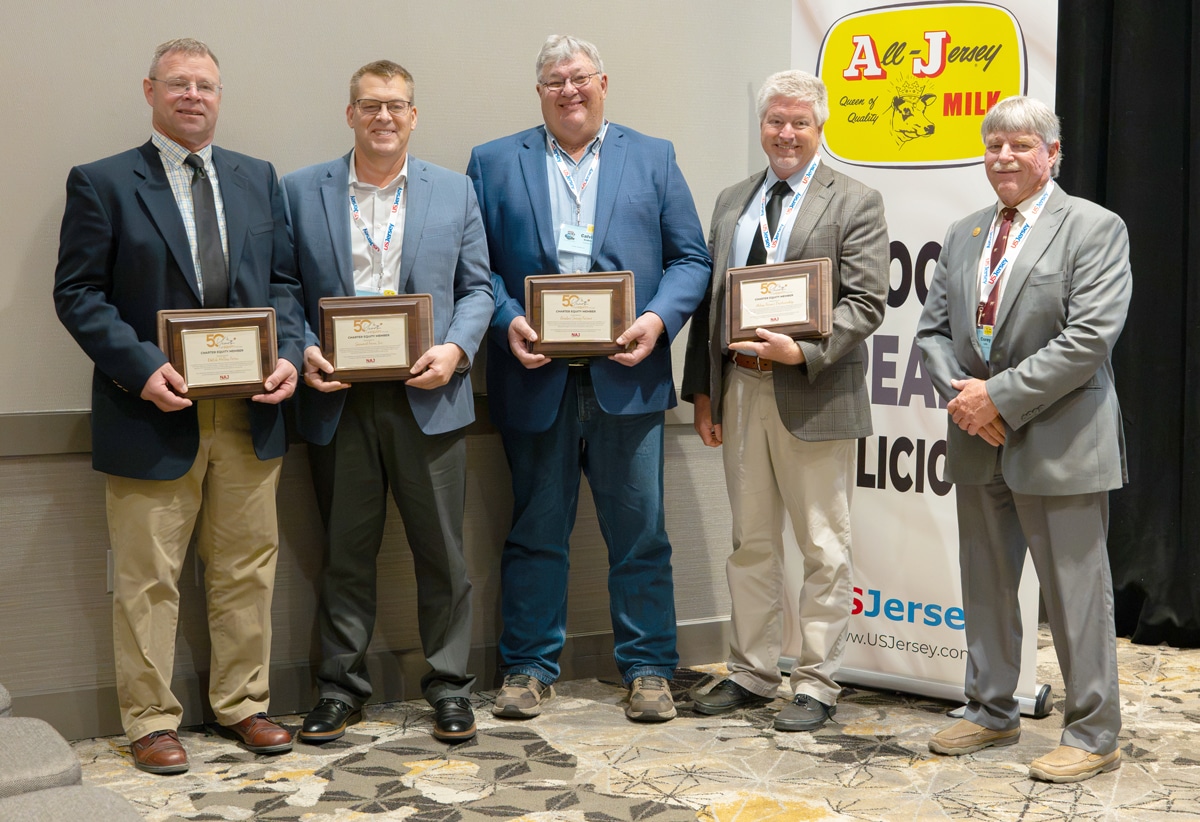
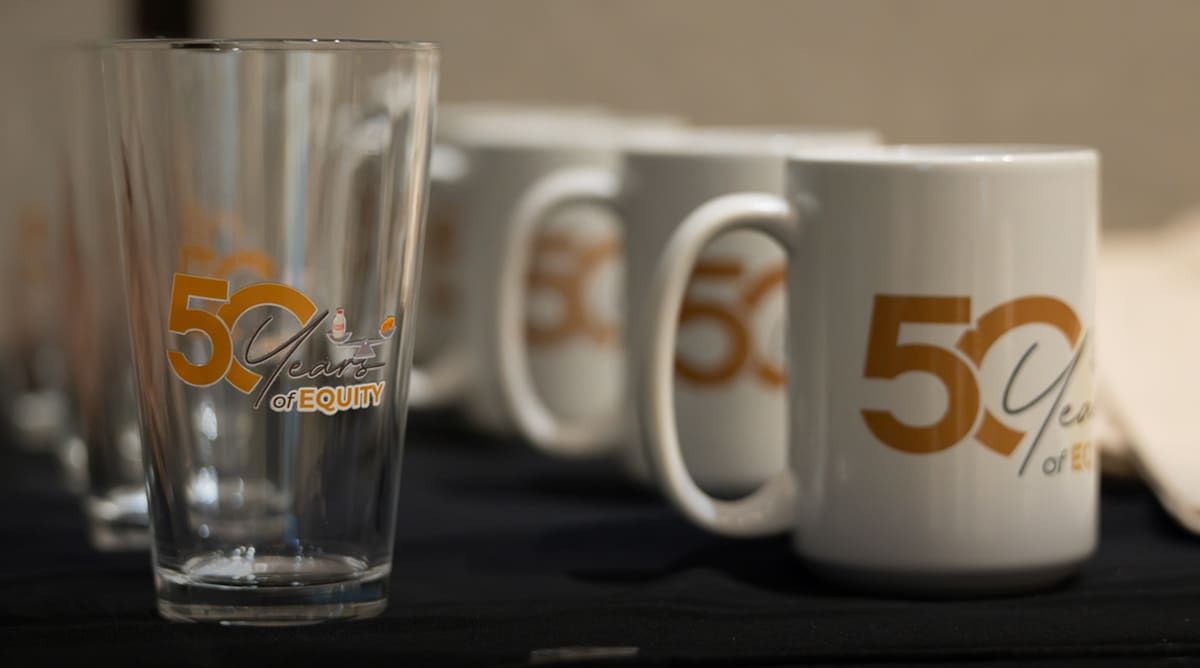
Half a century after the launch of Project Equity, Jersey breeders and leaders gathered in Springfield, Mo., to celebrate a program that many credit with transforming the breed’s future and changing how milk is valued across the dairy industry.
During a special ceremony that followed the National All-Jersey Inc. (NAJ) annual meeting, producers, organization leaders and former staff reflected on the producer-funded initiative that championed fair pricing for high-component milk while fueling advances in genetics, production and the commercial viability of the Jersey cow.
Former NAJ General Manager Erick Metzger cited perhaps the strongest evidence of its success.
“Every market that converted from fat-skim pricing to multiple-component pricing (MCP) stuck with multiple-component pricing,” he said. “Nobody said … this component pricing isn’t working for us … The producers never said it. The processors never said it. There was never even a thought or a proposal to go back to fat skim pricing. If that’s not the measure of success, I don’t know what is.”
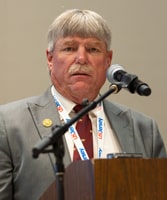
While speakers celebrated the program’s accomplishments, they also honored the leaders and producers whose vision and commitment made them possible.
Looking ahead, NAJ President Corey Lutz, Piedmont, N.C., said Project Equity’s mission remains as important today as when the program began in 1976.
With growing demand for protein-rich foods and value-added dairy products, he said, Jersey milk is well positioned, but continued success will depend on continued advocacy for fair value and continued investment in the breed’s future.
“Promotion is key. Advocacy is key. Equity is key,” Lutz said. “As stewards of the breed, we must continue to tell the story. We cannot rely on others to tell the story for us.”
In many ways, that philosophy launched Project Equity 50 years ago. Rather than waiting for others to recognize the value of Jersey milk, breeders invested in their own future and made the case themselves.
The Challenge that Sparked Change
The anniversary celebrated Project Equity’s accomplishments, but speakers were quick to point out that the program was born out of necessity.
In the 1960s and 1970s, Jersey breeders faced two significant challenges. While Jerseys were respected for producing rich milk, payment systems rewarded volume rather than fat and protein, making the breed less competitive in many markets. At the same time, leaders recognized the cows themselves needed to become more productive.
“It led our leadership at the time to question, ‘What should we be doing next?’” recalled Neal Smith, executive secretary of the American Jersey Cattle Association (AJCA) and NAJ. “How can we turn this around?”
The answer was not to choose between improving the marketplace or improving the cow. It was both.
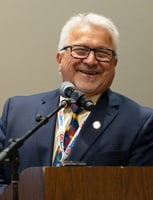
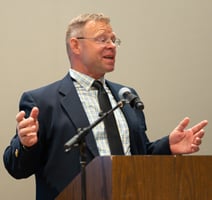
Smith credits Jersey leaders with having the courage to pursue both goals simultaneously. While advocating for fairer compensation for Jersey milk, they also challenged breeders to improve the cow through greater use of high-production A.I. bulls and mating programs that created a more balanced, efficient and productive animal.
“As people bought in, the Equity program became the catalyst that helped build momentum,” Smith said. “Breeders took ownership of what could be at least part of the solution to turn our breed around and achieve viability with commercial dairy farmers,” Smith said.
AJCA President Alan Chittenden, Schodack Landing, N.Y., echoed Smith’s sentiments, saying the partnership between the AJCA and NAJ has been essential to Jersey’s success in the marketplace.
“We did a great job of educating all those cheesemakers, proving that our milk was worth more,” he said.
Chittenden also experienced firsthand the journey of genetic progress, recalling a time when a 9,200-pound herd average was something to boast about. He said today’s performance reflects decades of coordinated effort to improve both the cow and the marketplace.
“We’ve got a cow that’s competitive, and we’ve got almost all the markets appreciating our milk,” he remarked.
Buying into the Vision
The success of Project Equity relied on producers being willing to put their own money behind an idea that offered no guaranteed return.
For former NAJ staff member David Brandau, Milton, Wis., that commitment began with a visit from Joe Lyon of Toledo, Iowa, then NAJ president, in the 1970s. Brandau was still milking cows on his family farm at that point.
“When he told me about Equity and cheese yield, it made me stop and think,” Brandau recalled. I made the decision to move my milk to Tri-State Milk, which was paying 10 cents a point on protein. I wasn’t a very popular person in the neighborhood for a long time.”
The decision was especially controversial because Brandau’s father had been the local field representative for Wisconsin Dairies Cooperative, the organization he left, and his cousin was the milk hauler. But Brandau said the move ultimately proved worthwhile.
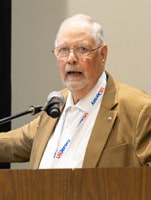
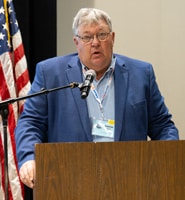
In a twist he described as coming “full circle,” his father later retired from Wisconsin Dairies Cooperative and went on to work part time for Norwalk Co-op Creamery Company, purchasing milk on cheese yield formulas such as the Van Slyke model, widely used in the component pricing systems NAJ advocated.
South Dakota’s Calvin Graber, a former AJCA and NAJ board member from Parker, shared a similar memory.
He recalled Lyon and AJCA Director Don Metzger of Larchwood, Iowa, visiting his family’s farm in the mid-1970s and asking producers like them to contribute just two cents per hundredweight to launch Project Equity. Graber said his family viewed the request as an investment rather than an expense.
Looking back, Graber believes the decision paid off beyond anyone’s expectations. Comparing Equity to other industry-funded initiatives, he argues that few have generated comparable returns for producers.
“It has paid magnanimous dividends,” he said.
Walter Owens of Frederic, Wis., who sat on both the AJCA and NAJ board as well, credited Project Equity with helping shape the modern Jersey cow and strengthen the breed’s position in the dairy industry.
“I truly believe Equity is the reason the Jersey cow is who she is: the most efficient, most profitable cow there is, the breed of choice for many of us,” Owens said.
He also vividly recalls the financial impact when his family farm began shipping milk to Edelweiss Creamery under MCP pricing in the early 1980s. “We gained $2.53 per hundredweight on our first milk check,” he said. “The return from your Equity dollars spent is unbelievable.”
While many producers remembered the direct financial benefits of component pricing, speakers emphasized that Project Equity’s influence ultimately extended far beyond the milk checks.
Beyond Milk Pricing
Former NAJ employee Sarah Gilbert said Project Equity transformed knowledge into action by taking what producers already knew about Jersey milk, backing it with science and making the case “processor by processor and Federal Order by Federal Order.”
“It has improved milk marketing for producers across the industry, not just those milking Jerseys,” she said in a note submitted. “A rising tide lifts all boats.”
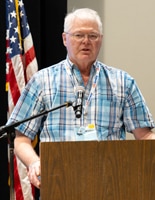
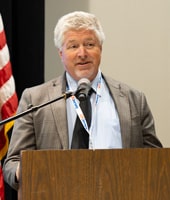
Former AJCA President Jonathan Merriam, Hickman, Calif., said the dual concept of better genetics and better markets was at work in his home area as well, where coffee-shop conversations led to two developments that put Hilmar on the map for Jerseys: Jerseyland Sires and Hilmar Cheese Company.
Jerseyland Sires’ effort to bring pedigreed bulls to the largely commercial herds in Hilmar was a major contributor to increased production and improved genetics, Merriam said.
“At the same time … we were getting paid just for the white fluid,” he said. “We knew that wasn’t the right way to be paid. Dick Clauss and a few others started to go to cheese plants, and from that came the idea and eventual outcome of Hilmar Cheese.”
Being paid fairly meant core Jersey herds could expand. Soon others followed suit and started to add Jerseys.
Today about 50,000 Jerseys in Merced County supply milk to plants that value components—growth Merriam credits to “the beginning of Equity, Jerseyland Sires, Hilmar Cheese and that core group of breeders that knew the benefit of the cow, knew that we could get a lot more from her, and knew that she was worth more than what we were being paid at the time for milk.”
Looking Ahead
While much of Equity’s early work focused on securing fair compensation for components, several speakers noted that its broader lesson was the importance of adapting to changing markets.
Former NAJ General Manager Mike Brown urged Jersey breeders and leaders to maintain the collaborative approach that made Project Equity successful and to stay focused on evolving market trends.
“It is important to realize we are part of a dairy supply chain,” Brown said. “We are not ‘we versus them.’ We are not the evil processor versus the evil co-op versus the farmer. We are all part of the system. We all need each other. Your hay grower needs you. You need your hay grower.”
Brown said keeping this in mind is especially important as dairy markets evolve. Not all dairy ingredients and components hold the same value, he noted, pointing to continued growth in high-protein products, Greek yogurt and value-added categories. Producers who will lead and grow in the future are those who understand the bigger picture and create strategies that work for everyone in the chain.
“Be respectful of data,” he emphasized. “If you base your work on data, in the long term, you’re going to win. Equity worked not just because we worked hard and had a vision, but also because the reality of the market was on its side. That continues to be true today.”
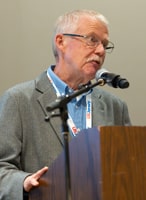
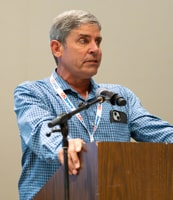
Reflecting on decades of research partnerships with universities, cooperatives and processors, Brown said Equity ultimately succeeded because it was built on relationships rather than confrontation and used data to demonstrate value across the dairy supply chain.
Brown’s call to remain attentive to market signals was echoed by former NAJ President Dave Endres, Lodi, Wis., who encouraged breeders to keep looking beyond traditional milk markets.
“Looking forward, I think we always have to look at things differently,” he said.
Endres believes one opportunity lies in developing stronger markets for black beef-on-dairy cross calves, including heifers. With a shortage of feeder calves, he argued that Jersey cross calves could add significant value if the right outlets were created.
Simple math, he said, suggests $500-1,000 per head can be gained “if we can make that market work.”
A Legacy Still Unfolding
Fifty years after Jersey producers agreed to invest a few cents per hundredweight in a bold idea, speakers said Project Equity’s legacy extends far beyond milk pricing. By pairing genetic improvement with market development, relying on research and building partnerships across the dairy industry, the initiative helped transform the breed’s economic future.
As today’s leaders look ahead to new opportunities, they said the same willingness to innovate, collaborate and advocate for Jersey cattle will be essential to ensuring the next 50 years of Project Equity are as successful as the first.