Milky Way Farm: Ready When Opportunity Knocked
Timing may be everything, but being prepared to capitalize on that timing can make all the difference.
For Milky Way Farm in Starr, S.C., years of direct-to-consumer milk sales and a willingness to adapt helped the dairy take advantage when consumer demand for local food accelerated during the coronavirus pandemic.
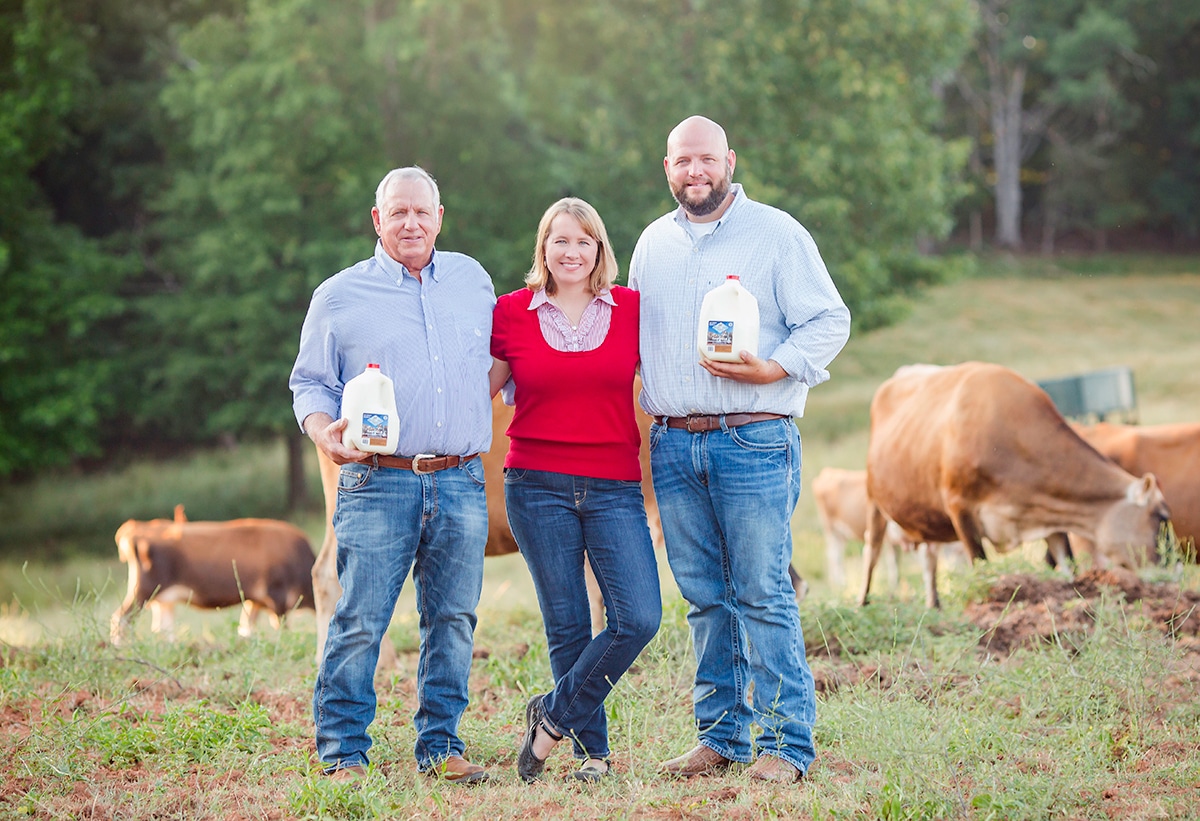
Today, L.D. Peeler Jr. and his grown children, Davis and Iris Peeler Barham, operate the Registered Jersey farm with help from Barham’s husband, Brad, and several employees. They milk about 120 cows, operate a creamery on the farm, and sell bottled milk and Jersey-Red Angus beef directly to consumers.
The business today, however, looks very different from the one the Peelers operated when they were selling commodity milk.
Reading the Writing on the Wall
The first step to on-farm processing came nearly two decades before COVID.
When a family member serving on the corporate resolutions committee for their milk cooperative once asked about the future of the small dairy farm in a meeting, the response was blunt and memorable: “When are you going to read the writing on the wall?”
“At that point my family realized that we weren’t going to be able to make it milking 50 or even 100 cows and selling commodity milk,” Barham said.
The milk inspector had another idea.
“He told my father that if we were going to make it, we needed to start selling our own milk,” Barham continued. “He said, ‘You have the cleanest milk in the state.’”
L.D. pushed back initially, but the milk inspector was determined.
“He kept saying, ‘You need to do this,’ and finally Dad said, ‘Okay, what do I need to do?” Barham recalled. “The inspector said, ‘That’s it. Tell me you want to do it.’ He showed back up within a week, took a milk sample and came back a week later with our permit.”
The Peelers started small, taking coolers of bottled milk in the back of a truck to farmers markets. For years, direct sales represented only a small portion of the family’s production while the co-op continued picking up the rest.
That changed in 2016 when the co-op told the family it would no longer pick up their milk unless they sold 100% of it to them.
“Dad was very worried about that because it is a security net to know that the milk we could not sell on our own was going somewhere,” Barham said. “In reality, it was the best letter we ever received because it forced us to be on our own with no backup. We stopped selling our milk at Class III and buying it back at Class I.”
At that point, they cut the herd to 60 cows—a size they believed they could support with their direct sales.
Then came the pandemic, which changed everything.
“Store shelves were bare and people started looking closer to home for food,” Barham said. “The story of where we are now is a success story of COVID, to be honest, because we have sold 100% of our milk ever since.”
Finding a Place for Everyone
The Peeler family’s dairy story began in the early 1900s in Cherokee County, S.C., where L.D.’s grandparents started milking cows and delivering milk door-to-door as J.S. Peeler Dairy. More than 100 years and four generations later, dairy farming remains a family business.
L.D. established a Registered Jersey herd in 1978 with the purchase of 12 head from his father. In 1987, as the last dairy in Cherokee County, he moved the family from Gaffney to Starr and established Milky Way Farm.
There was no formal succession or expansion plan for bringing the next generation into the business. Instead, family members returned as circumstances allowed and gradually built responsibilities around the farm’s needs and their own skills.
Davis returned in 2002 and operated the farm with L.D. for about 15 years.
“I didn’t get to come back home for many years because there wasn’t money to make that happen,” Barham said. “But when Brad got the opportunity to move east, I called my father and said, ‘We’re moving back, and we’re either coming home or moving to Tennessee.’ His comment was, ‘Come on home and we’ll figure it out.’”
At that point, there was no full-time position waiting for her.
During her first year back, Barham began identifying needs around the farm—cleaning and fixing things, improving the website, strengthening marketing efforts and laying groundwork for expanded Jersey beef sales. As the business grew, so did the need for more cows.
“I essentially created a full-time job for myself,” Barham said.
Looking back, Barham said Davis noted that each family member seemed to return at just the right time for the person and the farm.
Today, L.D., Davis and Iris are full-time on the farm, with each taking the lead in different areas of the business. L.D. focuses on finances, milk sales and deliveries; Davis oversees the creamery and land and hay operations; and Iris works with the cows, employees, marketing and inventory. Brad works alongside them on reproduction through breedings and matings and assists with culling decisions.
Family members also deliberately overlap responsibilities.
“We all kind of cross over in other paths so there is a second set of eyes,” Barham said. “There’s a lead in that area, but there is also somebody else helping to support it. If something happens, you’re not down completely with nobody knowing what is going on.”
From Milk Room to Modern Creamery
The family’s processing operation has evolved with the business.
“When we first started, we bottled milk in our milk room,” Barham said. “We used an S-hook, hose and shutoff valve and sat on a bucket to fill jugs, which were then put in crates and hauled to the refrigerated truck for storage. There were times it would take all day to jug milk.”
The family outgrew that system, investing in a bottling machine in 2006 and building both a new creamery and robot barn in 2021. In a setup unique to the state, both the cattle facilities and creamery are under the same roof—a first for an approved facility in South Carolina, according to Barham.
“From teat to truck is less than 50 feet,” she said.
Extensive automation in the new facilities has helped the Peelers handle the work with a relatively small crew.
“We are jugging everything from a 120-cow herd in under 22 hours a week with three employees,” Barham said.
The line is manually loaded and unloaded, but the capper, labeler and date stamper are automatic. A touchscreen pasteurizer allows employees to set volume and temperature parameters for each batch. The Peelers also added a walk-in cooler and an additional bulk tank, allowing them to hold milk over the weekend instead of requiring employees to jug milk seven days a week.
The creamery also makes use of practical, lower-cost solutions. Rather than building a warehouse for milk jugs, the family uses 18-wheel trailers for storage, backing them up to the loading dock when jugs are needed.
“I hate them sitting around, and they are ugly to look at,” Barham said. “But they are much cheaper than building a warehouse. And we don’t have to touch the jugs twice. They come in loaded, we unload what we need, fill them, and then off they go.”
More than Milk
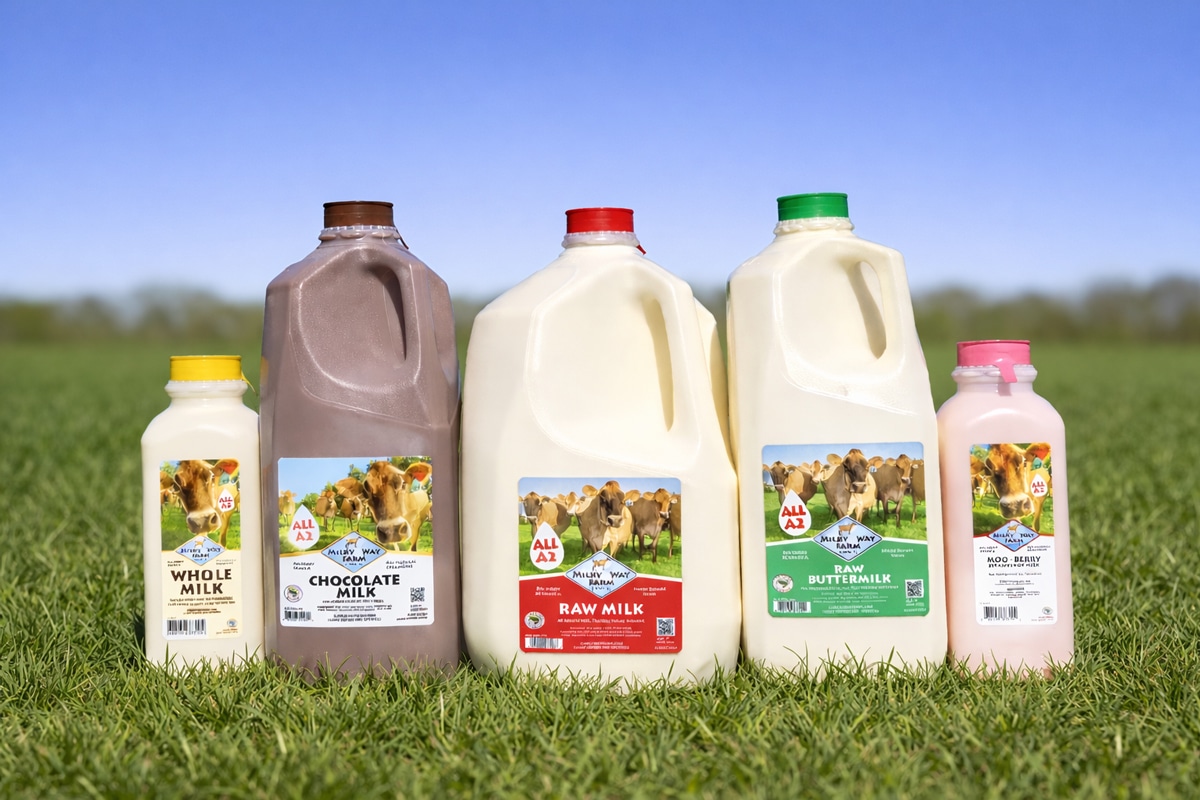
Milky Way Farm produces unhomogenized raw whole milk, cultured buttermilk and cream, along with unhomogenized, pasteurized whole milk, chocolate milk and seasonal flavored milk to customers across South Carolina.
Davis brought chocolate milk to Milky Way, continuing the family’s legacy of the 1980s and 1990s.
“Dad hauled milk to Peeler’s Dairy and had spent time in the plant, so he knew some trade secrets, like the kind of cocoa they were using, so we figured it could be a big hit for us too,” Barham said.
Because of South Carolina’s raw-milk regulations—which require raw milk to remain untouched, with nothing taken out or added—chocolate and flavored varieties are pasteurized.
Today, the family sells about 300 gallons of chocolate milk each week, and demand has remained consistent. Chocolate milk and two seasonal flavors, Holly’s Kiss (cookies and cream) and Tiger Fuel (orange cream), have won awards in the Southeast Farmstead Dairy Products Competition sponsored by the Southeast Dairy Business Innovation Initiative.
“Flavored milk is fun and keeps people engaged with our products,” Barham said. “Raw milk is the foundation and product leader, but nothing changes with it. So to be able to talk about new flavors on social media and engage with customers is great. I have always said, ‘If Starbucks can make a fortune on seasonal drinks, so can I.’”
Education Part of the Product
Most customers buy Milky Way Farm products because they are local, nutritious, delicious, and offer what store-brand milk does not. With that comes an opportunity—and a need—to educate them about the products, the farm and the cows.
Barham fields questions about everything from vaccines and rations to A2, organic and GMO.
“The general population is more educated than they used to be,” she said. “But whether it is good education or bad education depends on the source.”
Barham views those questions as opportunities for conversation. A customer may ask about pesticides, for example, when they really want to know about herbicides. She uses those conversations to explain the distinction and how agricultural practices and regulations can differ among crops and livestock.
That education also helps customers understand why Milky Way Farm milk costs more than conventional supermarket brands.
“I don’t try to compete against Walmart, Publix or Kroger because that is not what we produce and bottle,” Barham said. “We can’t compete against them and expect to stay in business.
“I can’t produce milk for $2.50 per gallon. That’s why we got out of that business. Our milk looks different, it tastes different and it feels different because it is different.”
Education happens both in person and online. Barham sees the farm’s website and social media as complementary but distinctly different marketing tools.
“Our website is who we are and what we do,” she said. “It provides permanent information about the farm and answers frequently asked questions. Social media is all about current events.”
The farm uses the two together, directing social media followers to the website for information such as retail locations and using the website to encourage visitors to follow the farm on social media.
“When people ask, ‘Where can I get your milk?’ on social media, I don’t answer that directly, but give them a link to the page on our website that lists our retail partners,” Barham said. “That drives traffic to the website, and other customers who read the comments can find us, too.”
Although she admits she dislikes social media, Barham recognizes its value.
“I would love to be able to get rid of social media, because it is a time thief,” she said. “But I have to use it to stay engaged. It is the news source for our farm, showing there are real, live, breathing bodies behind the Milky Way Farm brand.”
Neither tool replaces personal interaction, though.
“You cannot accomplish what you want to do education-wise without a verbal conversation,” she said. “You cannot do it with your website, and you cannot do it with social media. You need to hear the emotion in their voice or see the expression on their face to know if they understood what you said or are still confused.”
Building on What They Have
While the dairy facilities and manure handling are at capacity, the farm still has room to expand its feed production and beef business.
“How can we diversify and have more income with what we have here?” Barham said. “That is the beef side. It really goes hand in hand with the milk market. We already have a milk customer, so we are not reinventing the wheel.”
The Peelers have sold beef to local customers for about 20 years, but several years ago they developed a more structured retail business. Today they sell halves and wholes and 1-pound packages of 90/10 ground beef through their website. They also make a primal blend of ground beef that contains about 20% liver and heart, which Barham said sells out quickly.
Ground beef sales often serve as a gateway to larger purchases.
“If the hamburger is this good, what are the roasts and steaks like?” Barham said customers often ask.
The farm expects to sell about 25 head as halves and wholes this year and forecasts growth to 70 head in the next few years.
To support that growth and supply larger carcasses for restaurants and grocery stores, the Peelers plan to develop a herd of about 20 Jersey-Red Angus crossbred cows. The F1 cows will be bred to produce F2 animals destined for beef rather than retained as replacements.
For direct-to-consumer customers, however, Barham believes the current Jersey-Red Angus F1 carcass size is ideal.
“A 600- to 650-pound hanging weight of a Jersey cross is much better for a customer to store at home than an 800- or 900-pound carcass,” she said.
For Milky Way Farm, building a lasting business has meant recognizing the limits of the conventional milk market and identifying what customers value instead. The family has built new markets for its milk and Jersey cattle while preparing for what comes next.
The Peelers take pride in the quality of their products, but they have a sense of humor, too.
“As the back of our milk truck says, ‘Milk so good, it will make you put the cookies down!’” Barham said.
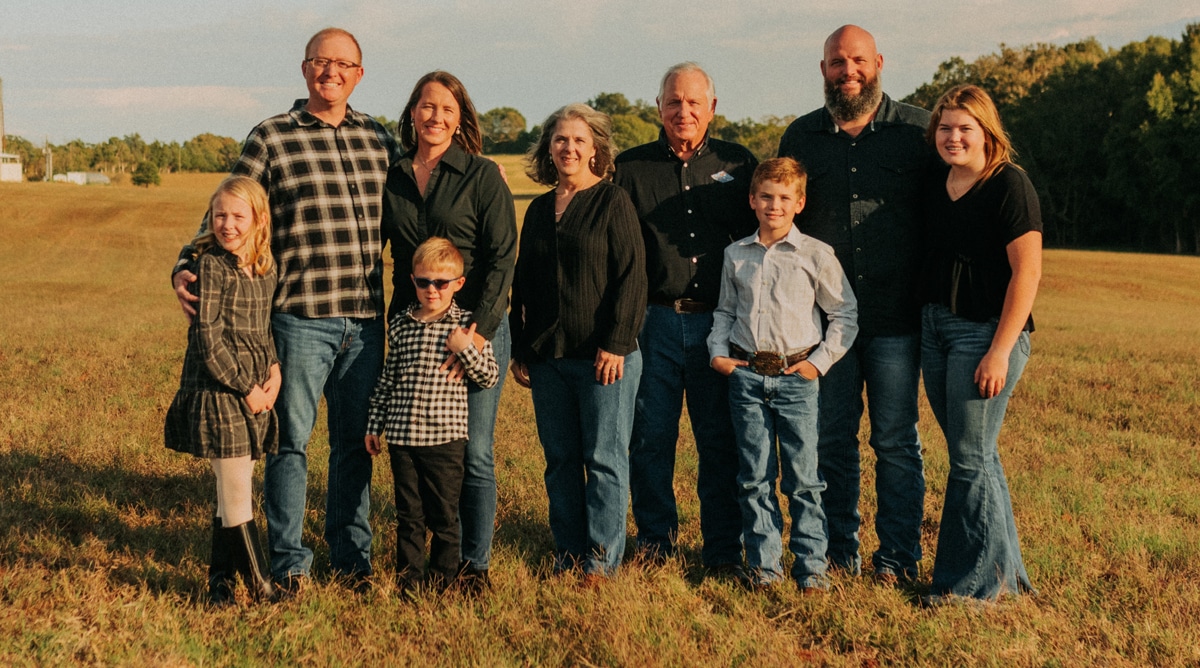
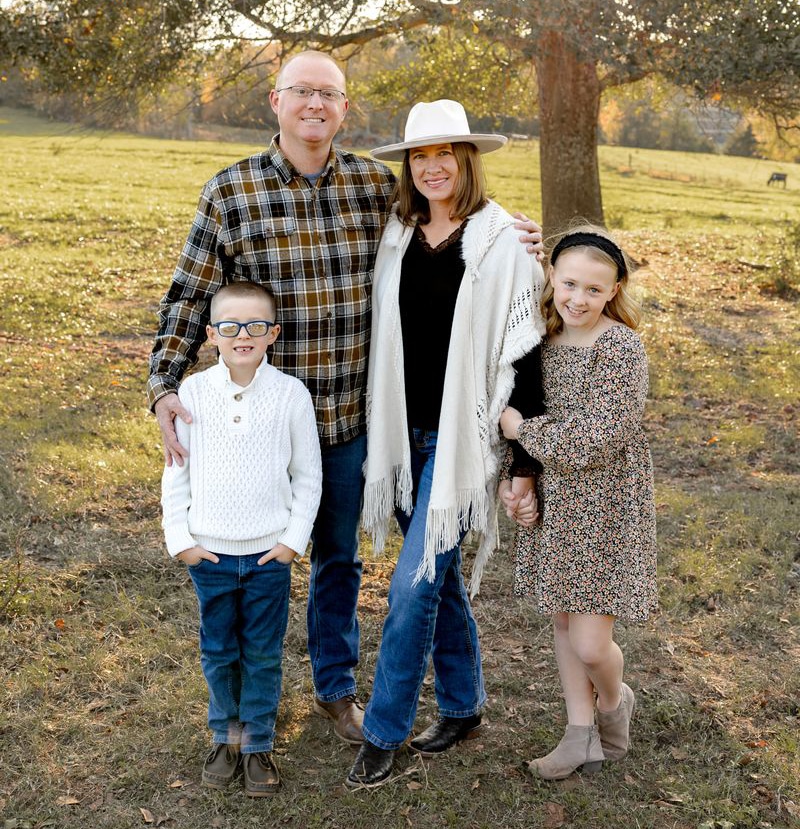
Feature Image: The Peelers – Brad and Iris Barham, left, and their children, Addie and Hudson; L.D. Peeler and his wife, Harriett Belue, center; and Davis Peeler and his children, Jasper and Eva – operate Milky Way Farm in Starr, S.C.